
What is a Root Canal?
Inside every tooth is a soft tissue called the pulp, made up of nerves and blood vessels, housed within a narrow space known as the root canal. This pulp can become inflamed or infected for several reasons — deep decay, repeated dental work, a crack or chip, or even trauma to the tooth (sometimes without any visible damage). Left untreated, this infection can cause significant pain and may even lead to an abscess.
In the past, the standard solution was simply to remove the affected tooth. Fortunately, dental care has come a long way — today, your trusted dentist can offer root canal therapy to treat the problem and save your natural tooth.
How will I know if I need a root canal?
Tooth damage or infection doesn’t always cause noticeable symptoms. When symptoms do occur, they may include:
- Persistent toothache — Pain that won’t go away and feels like it’s coming from deep within the tooth. It may radiate to nearby teeth, the jaw, or facial muscles.
- Pain when biting or chewing — Discomfort under pressure can signal damage or infection in the tooth’s inner nerves.
- Tooth discoloration — Infection can disrupt blood flow to the tooth, causing it to darken or discolor.
- Swollen gums — The gum tissue around the affected tooth may become tender and swollen.
- A gum bump near the tooth — This can form from a buildup of pus and, if it drains, may cause an unpleasant odor or taste.
- Bad breath — Persistent bad breath or an off taste in the mouth can be a sign of infection.
- Facial swelling — Pus that can’t drain properly may cause the jaw or face to swell.
- A loose tooth — Untreated infection can spread to the jawbone, weakening the structures that support the tooth.
What to expect from treatment
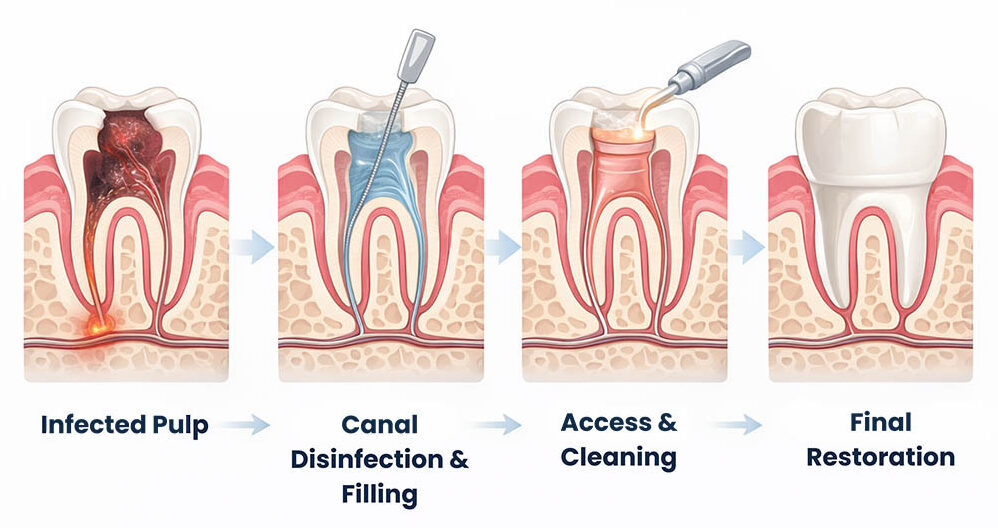
Treatment focuses on saving the tooth rather than extracting it. The dentist will carefully remove the inflamed or infected pulp, then clean and disinfect the inside of the tooth to eliminate any remaining bacteria. Once the canal is thoroughly cleaned, it’s sealed to prevent future infection.
In most cases, the tooth will need a crown or filling afterward to restore its strength and shape, allowing it to function just like any other tooth in your mouth.
Most people are surprised by how manageable the experience actually is. Thanks to modern techniques and effective anesthesia, a root canal feels very similar to getting a routine filling — and for many patients who’ve been dealing with pain, it brings welcome relief almost immediately.
The entire process is typically completed in one or two visits, depending on the complexity of the case. Afterward, most patients return to their normal eating and drinking habits within a day or two, with only mild soreness that improves quickly.
The benefit of saving your natural teeth
One of the biggest advantages of root canal treatment is that it allows you to keep your natural tooth. This means you can continue chewing normally, preserve your natural bite, and avoid more extensive — and often more costly — dental work down the road. With proper care, a tooth that has undergone a root canal can last for many years, often a lifetime.
If you’re experiencing tooth pain or think you may need a root canal, don’t wait — early treatment is key to saving your tooth. Call our office today to schedule an appointment.